



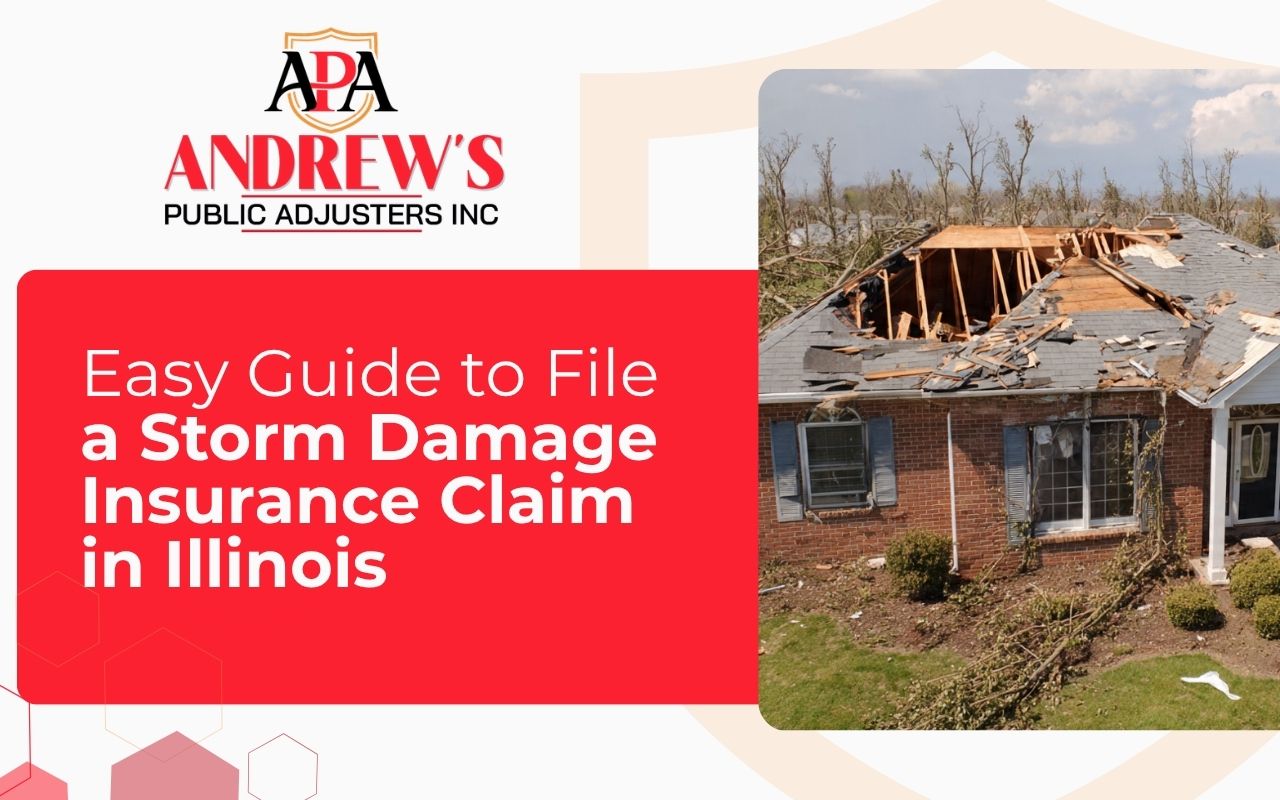
Easy Guide to File a Storm Damage Insurance Claim in Illinois
how to file a storm damage insurance claim in Illinois can feel hard after a bad storm. However, Andrew´s Public Adjusters Inc helps make the process clear, calm, and easier to follow.
Storm recovery needs quick action, good records, and smart steps. So, this guide explains what to do after storm damage and how to move through the claim with more confidence.
Why Fast Action Helps Protect Your Storm Insurance Claim
After a storm, quick action can protect your home and your claim. Andrew´s Public Adjusters Inc reminds homeowners to stay safe first, then start the claim process as soon as possible.
In many cases, delays can create more damage and make your case harder to prove. Therefore, how to file a storm damage insurance claim in Illinois starts with fast and careful action.
Make sure your family and home are safe
Stop more damage with simple temporary repairs
Tell your insurance company about the loss quickly
Know Your Illinois Policy Before You Start the Claim
Your insurance policy explains what kinds of storm damage are covered. Andrew´s Public Adjusters Inc suggests checking your limits, deductibles, and any special rules before you speak with the insurer.
This step helps you understand what support may be available. Also, it helps you follow Illinois property damage claim steps with fewer surprises later.
What to Do After Storm Damage at Your Property
The first job is safety, but the next job is protection. Andrew´s Public Adjusters Inc recommends covering broken areas, moving items from wet spots, and keeping all repair receipts.
These simple actions can reduce more loss and support your claim. As a result, how to file a storm damage insurance claim in Illinois becomes easier to manage from the start.
Cover roof openings with a tarp if safe
Board broken windows to reduce more loss
Save every receipt from cleanup or emergency work
Storm Claim Documentation That Makes Your Case Much Stronger
Good storm claim documentation can make a big difference. Andrew´s Public Adjusters Inc advises taking clear photos and videos of every damaged area inside and outside the home.
Also, write down what happened, when it happened, and what was damaged. This clear record can support how to file a storm damage insurance claim in Illinois with stronger proof.
Check All Property Damage Before Speaking With Your Insurer
Take time to inspect the full property after the storm. Andrew´s Public Adjusters Inc suggests checking the roof, siding, gutters, ceilings, walls, attic, and basement for hidden damage.
Even small signs can grow into bigger issues later. Because of that, careful inspection supports better estimates and a more complete claim.
Simple Illinois Property Damage Claim Steps Every Owner Should Know
Once you report the loss, the insurance company usually sends an adjuster. Andrew´s Public Adjusters Inc recommends staying organized and showing all damage during the visit.
Keep your photos, notes, receipts, and repair estimates in one place. Then, how to file a storm damage insurance claim in Illinois becomes a clearer process with fewer delays.
Report the loss to your insurer
Prepare records before the inspection visit
Review the estimate before you accept payment
How Public Adjuster Support Can Improve Your Storm Claim
A public adjuster works for the property owner, not the insurer. Andrew´s Public Adjusters Inc can review damage, explain policy language, and help present a stronger claim.
This support is often useful for large or disputed losses. So, public adjuster storm claim help can reduce stress and improve communication during the process.
Common Claim Mistakes That Can Slow Down Your Payment
Some homeowners wait too long to report the loss or forget to save receipts. Andrew´s Public Adjusters Inc often sees claims weakened by missing photos, poor records, or rushed decisions.
Another mistake is accepting a fast offer before all damage is known. For this reason, careful review is always important for a fair result.
Ways to Improve Your Final Insurance Settlement in Illinois
A strong claim needs proof, clear numbers, and steady follow-up. Andrew´s Public Adjusters Inc recommends getting repair estimates, keeping extra living expense records, and reviewing all offers closely.
These steps can help show the full size of your loss. In addition, how to file a storm damage insurance claim in Illinois is easier when your records are complete and easy to read.
Collect more than one repair estimate
Track hotel, food, and travel costs
Ask questions if the offer looks low
Frequently Asked Questions
When should I report storm damage to my insurance company?
You should report it as soon as possible after the storm. Andrew´s Public Adjusters Inc recommends early notice because delays can create problems for your claim.
What documents should I collect after storm damage?
Save photos, videos, repair receipts, contractor estimates, and a written list of damaged items. Good storm claim documentation can make your case much stronger.
Can I make temporary repairs before the adjuster arrives?
Yes, you should take safe steps to stop more damage. However, keep receipts and take photos before and after the temporary repair work.
When should I ask for public adjuster storm claim help?
You may want help when the damage is large, the process feels confusing, or the insurance offer seems too low. Andrew´s Public Adjusters Inc can guide that review.
Where can I get help with my storm damage claim?
You can reach Andrew´s Public Adjusters Inc through the storm claim contact page. You can also learn more on the property damage services page.
Clear Next Steps to Move Your Illinois Storm Claim Forward
Storm damage can feel stressful, but a clear plan helps. Andrew´s Public Adjusters Inc shows homeowners that how to file a storm damage insurance claim in Illinois starts with safety, records, and steady follow-up.
When you act early, document everything, and ask for support when needed, your claim can move in a better direction. That way, how to file a storm damage insurance claim in Illinois feels less confusing and more manageable.